

Non-surgical facelifts have become one of the most requested anti-aging treatment options in modern aesthetics. These treatments promise substantial facial rejuvenation with minimal downtime.
However, the sector’s growing popularity has exposed a critical issue: the failure of generic, one-size-fits-all protocols. Fixed approaches often cannot deliver natural, lasting results.
Faces age in unique ways. This process is driven by individual anatomy, genetics, and lifestyle factors such as collagen loss and fat redistribution. Key structural changes involve skin laxity, bone atrophy, and muscle related issues, leading to the formation of jowls and changes in the jawline.
A fixed protocol that ignores these diverse aging patterns often results in unsatisfactory outcomes or the appearance of being visibly “done.”
Experts agree that the most effective non-surgical facelift is not a single treatment or device. It is a custom-built strategy designed to restore youthful contours.
Success relies entirely on detailed personalisation, advanced clinician expertise, and a treatment plan that respects individual anatomy, skin quality, and specific aging patterns.
The Shift Towards Bespoke Facial Rejuvenation
The accessibility of powerful energy-based devices and advanced injectables, such as dermal fillers and neuromodulators like Botox, has transformed the landscape of facial rejuvenation. Patients now have more options than ever to address signs of aging without committing to traditional surgery.
Simultaneously, patients are highly aware of the risks associated with poor planning. The prevalence of overfilled or imbalanced outcomes frequently shared across digital platforms has driven a demand for natural, subtle results. Informed patients are now prioritising safety, expert-led care, and precision.
Personalisation is no longer a luxury in aesthetics. It has become the defining marker of quality. This tailored approach ensures that treatments restore youthful contours and definition rather than simply adding indiscriminate volume, which can lead to an unnatural appearance.
Defining the True Non-Surgical Facelift
A true non-surgical facelift is a strategic combination of techniques designed to achieve three key goals: restoring structural support, improving skin quality, and creating subtle, natural lift. This contrasts sharply with the misconception that a non-surgical facelift is achieved by a single type of filler or one machine session.
The non-surgical anti-aging treatment must address the foundational changes of the face. Due to individual variation in aging, the most effective plans evolve around the patient’s specific anatomy, rather than applying a fixed protocol.
Depending on the individual’s presentation, a bespoke plan is designed to counter the specific mechanisms of aging, including bone atrophy and skin laxity.
- Replacing deep volume precisely to restore foundational support where age has caused bone atrophy.
- Rebalancing facial proportions to harmonise the midface, jawline, and lower face, addressing early jowls.
- Improving skin firmness and elasticity to combat skin laxity and maintain results long-term.
This comprehensive approach ensures that the plan focuses on long-term structural improvement, often acting as a combined procedure strategy without surgical intervention.
The Anatomical Imperative: Why Faces Age Differently
The fundamental reason a generic anti-aging treatment fails is that the process of facial aging is not uniform. A personalised strategy addresses how a face has aged, not merely where surface wrinkles have appeared.
Aging is driven by complex, multi-layered deterioration involving skin, fat, muscle, and bone. These changes include significant volume loss, often referred to as bone atrophy, coupled with the descent and redistribution of fat pads, and gradual collagen loss leading to increasing skin laxity.
A true non-surgical facelift must accurately diagnose which component is dominant. Addressing these foundational issues requires precision, ensuring results restore youthful contours without creating an unnatural appearance in the lower face.
Jowls Versus Vertical Neck Bands: Diagnosis Dictates Outcome
Two of the most common concerns driving requests for facial rejuvenation are the appearance of jowls and visible neck bands. It is clinically vital to differentiate these issues, as they represent entirely separate anatomical problems and require fundamentally different treatment approaches.
Understanding Jowls and the Jawline
Jowls are primarily caused by skin laxity and the descent of superficial fat and tissue over the edge of the jawline. This tissue migration often occurs above the Superficial Musculoaponeurotic System (SMAS). Non-surgical treatment strategies focus on replacing structural support using dermal fillers in the mid-face and pre-jowl sulcus, alongside energy-based devices designed to tighten the overlying skin.
Addressing Vertical Neck Bands and the Platysma Muscle
In contrast, vertical neck bands are a muscle related issue. They result from the separation and prominence of the underlying Platysma muscle, which appears as vertical cords stretching from the chin down the neck. Treating these deep muscle issues requires targeted relaxation using neuromodulators (such as Botox) or, in advanced cases, surgical intervention like Platysmaplasty to suture the muscle edges together.
The Limitations of a Standard Facelift
Patients often assume that a standard facelift procedure comprehensively solves all signs of neck aging and lower face sagging. However, clinical understanding shows that traditional facelifts, while effective for lifting the mid-face and redefining the jawline, have significant limitations when addressing deep muscle structures.
A crucial limitation is that a facelift alone does not surgically correct the vertical separation of the Platysma muscle. While skin tension from the lift may temporarily mask mild neck bands, studies show it will not prevent their reappearance during muscle movement or provide long-term correction of the prominent vertical cords.
The Necessity of a Combined Approach for Neck Rejuvenation
For patients presenting with significant neck aging, comprehensive facial rejuvenation requires a combined procedure. Optimally addressing deep neck issues necessitates treatments that go beyond simple skin lifting.
To improve the appearance of the Cervicomental Angle and eliminate excess bulk, submental liposuction is often necessary when excess submental fat contributes to a less defined neck. Removing localised fat deposits improves contours far beyond what skin tightening alone can achieve.
Surgical correction of advanced neck laxity typically requires a dedicated neck lift (Cervicoplasty) combined with a Platysmaplasty. This combined surgical strategy directly addresses both severe skin laxity and underlying muscle banding, yielding the most natural, harmonious results by treating both superficial and underlying structures.
For the non-surgical patient seeking an anti-aging treatment, this clinical distinction is vital. It dictates that a bespoke non-surgical plan must combine treatments for skin laxity (such as energy devices) with targeted neuromodulators for muscle-related neck bands, a true combined procedure strategy that avoids the facelift limitations of a single technique.
The Risks of a One-Size-Fits-All Approach
When non-surgical anti-aging treatment protocols are applied without a comprehensive, anatomical assessment, the risk of unnatural results increases dramatically. Simply targeting surface concerns, such as using excessive dermal filler to lift jowls, fails to address the underlying structural weaknesses, including bone atrophy and significant collagen loss.
This generic approach often leads to a heavy, overcorrected, or ‘puffy’ appearance, failing to restore youthful contours. High-standard facial rejuvenation requires understanding that lower face concerns are rarely isolated skin laxity issues; they are complex combinations of volume loss, tissue descent, and muscle changes.
Understanding Facelift Limitations: The Surgical Analogy
To appreciate the necessary complexity of a non-surgical strategy, it is vital to examine the limitations of traditional surgical approaches. Specialists widely acknowledge that a facelift alone is seldom the complete solution for addressing neck aging.
Studies show that while traditional facelift procedures effectively lift the mid-face and jawline, they often fall short in correcting deep muscle related issues in the neck or managing excess submental fat. This is a crucial distinction when planning effective alternatives.
The tension created by a facelift may temporarily mask mild neck bands, but it does not surgically correct the vertical separation of the underlying Platysma muscle. This failure to address the Platysma muscle means that vertical neck bands can reappear during movement, demonstrating the inherent facelift limitations when treating the entire lower face and neck.
The Necessity of Combined Procedures for Harmonious Results
To achieve optimal and lasting facial rejuvenation, surgeons routinely rely on a combined procedure approach. This principle must be mirrored when planning advanced non-surgical alternatives to restore youthful contours.
For instance, addressing severe neck aging often requires a dedicated neck lift, medically termed Cervicoplasty, alongside a Platysmaplasty. These procedures directly target skin laxity and the underlying Platysma muscle banding, providing long-term correction of vertical neck cords and improving the Cervicomental Angle.
Furthermore, submental liposuction is often recommended when excess fat beneath the chin contributes to a less defined neck profile. This combined approach yields the most harmonious results by treating both surface sagging skin and underlying structural issues.
Mirroring Surgical Precision in Non-Surgical Planning
The goal of a truly bespoke non-surgical plan is to achieve these comprehensive, balanced results without the need for surgery. This involves layering different techniques, ensuring that all aspects of neck aging and the lower face are treated harmoniously.
This strategic approach might involve using dermal fillers to address bone atrophy and restore support, coupled with energy-based devices to tighten skin laxity and stimulate collagen loss correction. By treating the face and neck as one continuous unit, specialists can effectively redefine the jawline, reduce the appearance of jowls, and mitigate vertical neck bands.
This shift from focusing on a single anti-aging treatment to implementing a strategic combined procedure plan is the new gold standard in modern aesthetic medicine.
Clinician-Led Care and The Role of Precision
Precision in facial rejuvenation requires an in-person, face-to-face consultation. This allows for open discussion regarding concerns, expectations, and long-term goals, a critical human element that no online booking form or generic package can replicate.
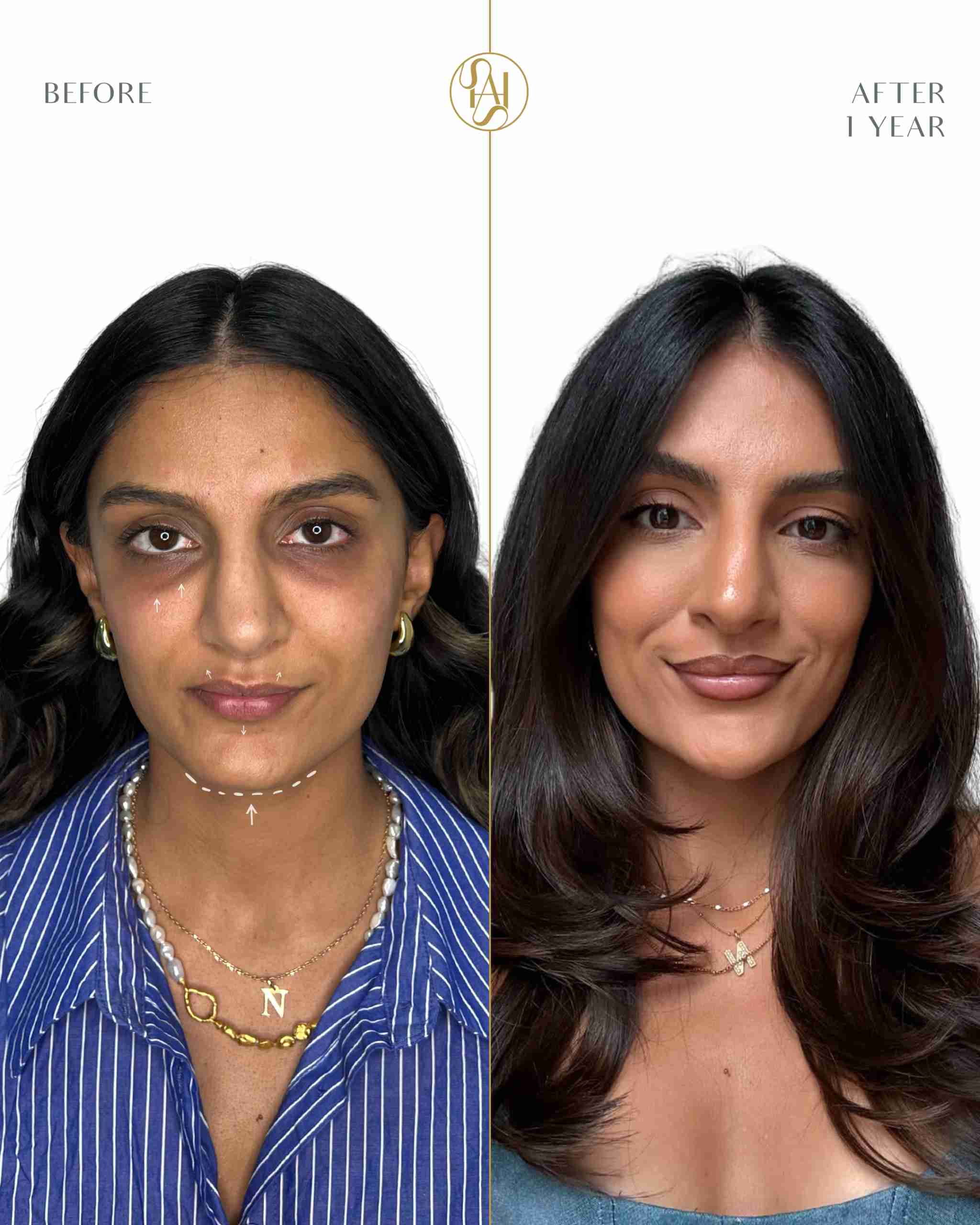
At Dr Hass Clinic, the non-surgical facelift is defined as a fully bespoke process. Led by Dr Hasaneen Al Janabi, a GMC-registered aesthetics doctor and member of the Royal College of Surgeons, treatment plans avoid pre-set packages. They are shaped around individual facial anatomy, addressing specific issues like bone atrophy and collagen loss, skin quality, and personal goals.
This personalised strategy may involve volume restoration using dermal fillers in the temples to subtly lift the outer face and brows. Targeted cheek filler supports the midface, reducing the appearance of sagging skin and helping to redefine the jawline. Advanced non-surgical options like Endolift laser tightening are also used selectively to firm the skin from within, addressing superficial skin laxity and prolonging lifting results.
For those seeking further guidance on how a personalised approach works in practice, the non-surgical face lift at Dr Hass Clinic in Mayfair provides a benchmark for high-standard, clinician-led treatment planning.
“I was nervous, never having tried any anti-ageing procedure, but everything was explained calmly and clearly, which put me at ease straight away. The results have been brilliant, tighter, brighter, more lifted skin.”
Shazana, patient testimonial following personalised Endolift treatment.
The experience reflects a critical truth: non-surgical anti-aging treatment requires expertise, trust, and careful decision-making focused on subtle enhancement. The goal is always to restore youthful contours, ensuring the patient looks refreshed, rather than obviously altered.
Anatomical Assessment: Differentiating Jowls and Neck Concerns
Effective facial rejuvenation requires a deep understanding of the structural causes of aging, not just the visible symptoms. Many patients seeking a non-surgical facelift are concerned about the appearance of jowls and an undefined jawline. However, these issues are often compounded by muscle-related issues in the neck.
A crucial distinction must be made between jowls, which result primarily from skin laxity, fat redistribution, and bone atrophy in the lower face, and the specific concerns of the neck aging process.
The Limitations of Facelift Surgery Alone
While the traditional facelift procedure effectively addresses the mid-face and lower jawline, studies show that it often has limitations regarding the neck. A facelift focuses primarily on lifting and redraping the Superficial Musculoaponeurotic System (SMAS) and the overlying skin.
However, a facelift alone often leaves neck laxity and underlying muscle banding uncorrected. The procedure does not surgically correct the vertical separation of the Platysma muscle, which is responsible for the appearance of vertical neck bands.
Addressing Vertical Neck Bands and Muscle Issues
Vertical neck bands are a common sign of neck aging and are caused by the separation and tension of the Platysma muscle. Simply tightening the skin, as occurs in some generic facelifts, may temporarily mask mild neck bands but will not prevent their reappearance during muscle movement.
This is why, in the surgical context, procedures like a neck lift (Cervicoplasty) and Platysmaplasty are necessary. A Platysmaplasty directly addresses the muscle-related issue, providing long-term correction of the vertical neck cords and improving the Cervicomental Angle (the angle between the neck and chin).
The Role of Submental Fat and Combined Procedures
Another factor contributing to a heavy lower face is excess submental fat (fat beneath the chin). This localised fat deposit often obscures the definition of the jawline and neck, even after a standard facelift.
For optimal results, particularly in the lower face and neck, a combined procedure is often recommended. Surgeons frequently combine a facelift with a neck lift (Cervicoplasty), Platysmaplasty, or submental liposuction. This combined strategy yields the most natural, harmonious results by treating both skin laxity and the underlying bony structure and muscle dynamics.
When approaching facial rejuvenation non-surgically, this anatomical knowledge remains critical. Clinicians must understand which specific components, be it bone atrophy, fat descent, or skin laxity, are contributing to the patient’s jowls and lower face concerns to select the correct non-surgical anti-aging treatment combination.
Comparing Generic Versus Personalised Non-Surgical Facelifts
The differences between a fixed protocol and a tailored approach are significant, impacting both the immediate result and the necessary long-term maintenance. A generic plan often treats surface symptoms, while a personalised strategy addresses the underlying anatomical causes of facial aging.
| Feature | Generic Protocol (One-Size-Fits-All) | Personalised Strategy (Bespoke Plan) |
| Assessment Basis | Focuses solely on visible lines or specific areas, such as Nasolabial folds. | Comprehensive anatomical analysis of bone atrophy, fat redistribution, and skin laxity. |
| Treatment Goal | Adding immediate volume to fill lines or achieving temporary tightness. | Restoring underlying structure, achieving facial harmony, and defining the jawline. |
| Risk of Unnatural Look | High risk of overfilling, creating heaviness, or results appearing “done.” | Low risk, as treatment targets the root cause of aging to restore youthful contours. |
| Techniques Used | One primary tool, such as high volume of a single dermal filler type. | Combined procedure approach: Fillers for structural support, neuromodulators (Botox) for muscle balance, and energy devices for skin laxity. |
Addressing the Complexities of Aging: Beyond Surface Sagging
The quest for effective facial rejuvenation demands a precise understanding of how the lower face and neck age. A traditional surgical facelift, while effective for lifting the mid-face and addressing jowls, often has limitations in correcting deep structural issues, particularly in the neck.
Studies consistently show that a facelift alone frequently leaves neck laxity and deep vertical neck bands uncorrected. This highlights why high-standard anti-aging treatment, whether surgical or non-surgical, requires a combined procedure approach to treat the full extent of neck aging.
Differentiating Jowls and Neck Bands
One critical element of assessment is differentiating the causes of lower face sagging. Jowls are primarily caused by skin laxity and fat descent over the jawline, requiring structural support or lifting.
Conversely, deep vertical neck bands are a muscle related issue resulting from changes in the Platysma muscle. Treating this requires specific attention, whether through targeted neuromodulators in a non-surgical plan or a Platysmaplasty in a surgical setting.
Ignoring the Platysma muscle changes means the results of any anti-aging treatment, even a full facelift, may be compromised, leading to the reappearance of vertical neck bands during muscle movement.
The Necessity of a Combined Procedure for Jawline Definition
To truly redefine the jawline and improve the Cervicomental Angle, treatments must address bone structure, fat deposits, and skin quality simultaneously. Just as surgical Cervicoplasty often requires submental liposuction to remove excess submental fat, the non-surgical plan must also target localised fat deposits and skin laxity.
By treating bone atrophy with structural dermal fillers, relaxing the Platysma muscle with neuromodulators (Botox), and tightening sagging skin with energy devices like ThermiTight, a bespoke non-surgical strategy achieves the harmonious results that a single procedure cannot.
This comprehensive strategy ensures that the facial rejuvenation is balanced, addressing the lower face and neck aging simultaneously to restore youthful contours. The American Academy of Facial Plastic and Reconstructive Surgery (AAFPRS) advocates for this multi-modality approach, confirming that the most natural and long-lasting outcomes stem from treating the underlying anatomical systems.
The Essential Guide to Informed Facial Rejuvenation
For individuals investing in their appearance and wellbeing, selecting the right clinician is paramount. The quality of the initial consultation often dictates the quality of the final result in any anti-aging treatment.
To ensure a successful outcome and avoid the risks associated with generic, one-size-fits-all protocols, potential patients must look for specific markers of quality and expertise in their chosen medical practice.
Prioritising Anatomical Expertise and Bespoke Planning
A high-standard, personalised approach requires a clinician with deep anatomical knowledge. This expertise is essential for diagnosing complex aging patterns that involve more than just surface wrinkles or minor skin laxity.
- Doctor-led clinics: Look for practitioners who possess the deep anatomical knowledge required to diagnose complex aging patterns, including those related to the Superficial Musculoaponeurotic System (SMAS) layer and the deep structure of the Platysma muscle.
- In-person consultations: These are non-negotiable. They allow for a dynamic assessment of facial movement, volume loss, and skin texture that digital images or online forms cannot capture.
- Fully bespoke treatment planning: The plan must evolve based on the individual’s unique anatomy, existing bone atrophy, skin quality, and long-term goals, rather than adhering to a fixed menu of services for facial rejuvenation.
Understanding the Limitations of Non-Surgical Methods
A crucial sign of expert clinician-led care is an honest discussion regarding the limitations of non-surgical methods. While dermal fillers and energy devices are excellent for restoring volume lost due to collagen loss or early-stage sagging skin, they cannot correct all forms of advanced structural descent or muscle related issues.
When neck aging or lower face concerns, such as pronounced jowls, become significant, the discussion must pivot to comprehensive strategies. Non-surgical options excel at subtle enhancement, but they may not be able to fully redefine the jawline or address severe skin laxity.
The Importance of Discussing Surgical Boundaries
Expert clinicians recognise when non-surgical techniques have reached their limit. This is particularly true when correcting advanced descent in the lower face and neck. A comprehensive assessment should include clear communication regarding what non-surgical methods can achieve and when surgical options, such as a formal facelift or neck lift, might be more appropriate for advanced sagging skin.
Many patients believe a traditional facelift is a one-stop solution for the entire lower face and neck. However, studies show that while a facelift effectively lifts the mid-face and treats jowls caused by skin laxity and fat redistribution, it often leaves neck laxity and muscle banding uncorrected.
Differentiating Jowls from Vertical Neck Bands
Understanding the cause of aging signs is key to effective treatment. Jowls are primarily caused by skin laxity and fat descent, requiring lift and volume replacement. Conversely, vertical neck bands result from changes and separation within the Platysma muscle. These require different surgical approaches for optimal correction.
A core limitation of facelift surgery is that it does not surgically correct the vertical separation of the Platysma muscle. Skin tension from a facelift may temporarily mask mild neck bands, but it will not prevent their reappearance during muscle movement.
Achieving Harmony Through Combined Procedures
To truly restore youthful contours and address the entire neck aging complex, a combined approach is often necessary. The neck lift (Cervicoplasty) and Platysmaplasty directly address muscle banding and severe skin laxity, providing long-term correction of vertical neck cords and improving the cervicomental angle.
For patients where excess submental fat beneath the chin contributes to a less defined neck, submental liposuction is typically recommended. Removing these localised fat deposits improves contours beyond what a simple facelift can achieve alone.
By integrating a facelift with procedures like Platysmaplasty or Cervicoplasty, the surgeon ensures that both the skin and the underlying structural issues are treated. This yields the most natural, harmonious results, prioritising overall facial balance and long-term maintenance strategies over fast, temporary fixes.
Frequently Asked Questions on Facial Rejuvenation
What defines the difference between a surgical and a non-surgical facelift?
A surgical facelift involves incisions and the physical repositioning of underlying tissues, including the Superficial Musculoaponeurotic System (SMAS) layer. It offers the most dramatic and long-lasting correction for severe skin laxity and pronounced jowls.
A non-surgical facelift uses custom combinations of injectables, such as dermal fillers, to restore volume lost due to bone atrophy, and energy devices to tighten skin. This approach is ideal for mild to moderate signs of aging and requires periodic maintenance to sustain results.
Does a traditional facelift fully address neck aging and vertical neck bands?
No. This is a critical limitation of traditional facelift surgery. While a facelift effectively lifts the mid-face and tightens the lower face to redefine the jawline, it provides limited correction for deep muscle related issues in the neck.
A facelift alone does not surgically correct the vertical separation of the Platysma muscle, which causes deep vertical neck bands. Skin tension from the lifting procedure may temporarily mask mild neck bands, but it will not prevent their reappearance during muscle movement. Optimal correction of neck aging often requires a combined procedure.
Why are jowls and neck bands treated using different strategies?
Jowls are primarily caused by the descent of facial fat pads and collagen loss combined with skin laxity along the jawline. Neck bands, conversely, result from the underlying changes in the Platysma muscle.
Effective facial rejuvenation requires treating these separate anatomical issues uniquely. Addressing jowls might involve structural dermal fillers or lifting the SMAS layer. Treating deep neck bands requires targeting the muscle itself, often via surgical Platysmaplasty or using neuromodulators (Botox) non-surgically.
When is a Neck Lift (Cervicoplasty) or Platysmaplasty necessary?
A dedicated neck lift (Cervicoplasty) is essential when significant neck aging is present. This procedure, often combined with a facelift, directly addresses severe skin laxity and prominent vertical cords.
Platysmaplasty is the specific surgical technique used to tighten and suture the separated Platysma muscle, providing long-term correction of vertical neck bands and enhancing the Cervicomental Angle. Furthermore, if excess submental fat contributes to a less defined neck, submental liposuction is often recommended to remove localised fat deposits and restore youthful contours. Combining these procedures yields the most harmonious results.
How long do the results of a personalised non-surgical facelift last?
The longevity of results varies significantly based on the customised techniques used, the patient’s metabolism, and their lifestyle. Results from structural dermal fillers, which are used to replace volume and address bone atrophy, can last between 12 and 24 months.
Skin tightening benefits from energy devices rely on the body’s natural collagen production. These benefits typically require periodic maintenance sessions to sustain the enhanced facial rejuvenation over time.
Is the non-surgical facelift painful?
Most non-surgical facelift procedures are well-tolerated. Practitioners use topical anaesthetics, local anaesthesia, or products containing lidocaine to minimise discomfort.
Patients typically experience only mild pressure or warmth during procedures involving advanced energy devices, such as ThermiTight. Minimal downtime is typically required, allowing patients to return quickly to their regular routine.


